Inventions Wanted
Invention City is seeking great new invention ideas to develop and license to manufacturers in the United States and internationally in virtually all fields including consumer, DIY, trade, tech, industrial, medical, sporting goods, outdoor, snack food, apps, and other categories. We are experienced inventors and entrepreneurs who look at opportunities creatively and seek to find the best pathway to profit for each invention submitted to us. Get started with a Brutally Honest Review ("The best deal in the world of inventing") or submit your invention for FREE here (homework required).
We are the real deal. Learn more about us and our experience here.
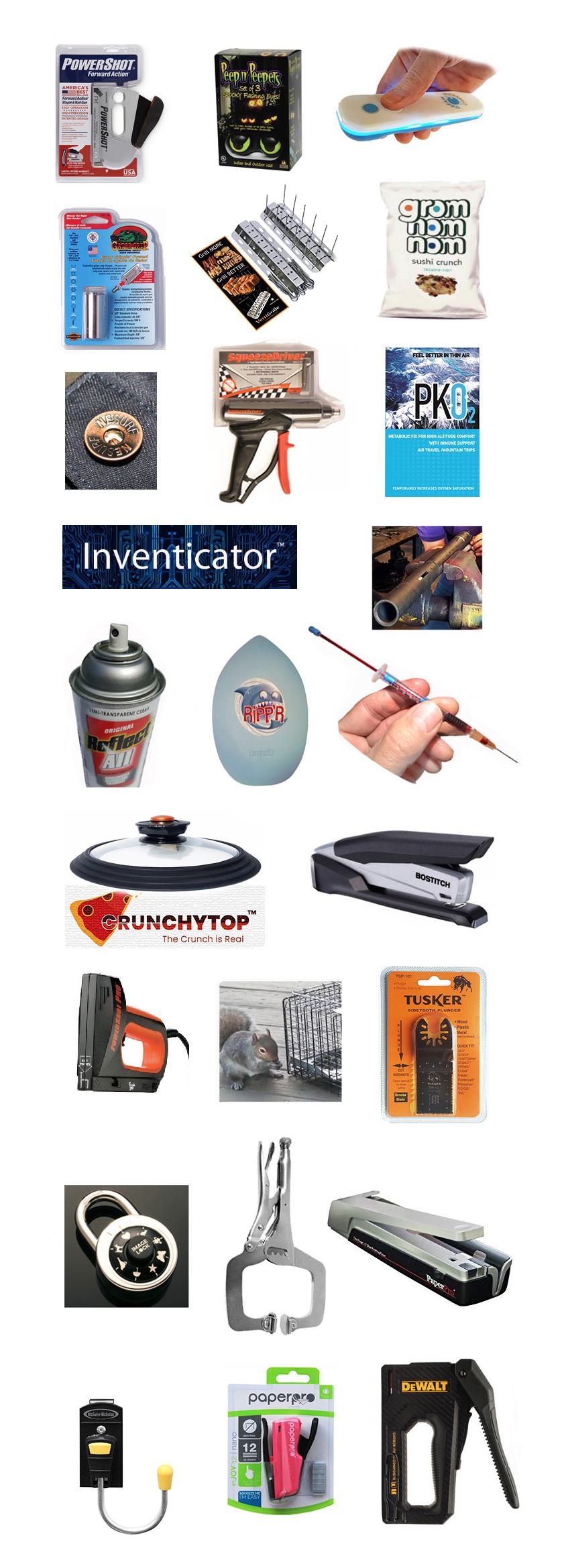
Below are examples of some of the inventions we commercialized over the years.
Learn About Invention City
Rated A+ by BBB
Get started with a Brutally Honest Review. Questions? Email info@inventioncity.com
Introduction to Invention & Patent Licensing
Licensing is the easiest path to commercialization and profit: you get paid while someone else takes your invention, turns it into a product and manages the day to day grind of making and selling it.
When you give a company the right to make and sell your invention in return for payment, you are granting a license - you are the licensor the company is the licensee. The payment can be an ongoing percentage of sales, a royalty, or it can be a one-time payment, a buyout.
The downsides to licensing are lack of control and a smaller share of profits. The upsides are less work, less investment and less risk. If you want to maximize the potential return from your invention AND you are willing to work extraordinarily hard AND you have the ability to build and manage a business… then licensing might not be the right solution for you. For everyone else it’s a path worth serious consideration.
Many inventors harbor the fantasy that someone will pay for an undeveloped idea. While fantasies sometimes come true (someone does win the lottery), you should keep your feet planted firmly in reality. Fortune 500 corporations will only license patented (or patent pending) inventions. Smaller companies are more flexible but also have a strong preference for ideas that are developed and possess some form of intellectual property protection.
The steps to licensing an invention are as follows:
1. Identify & research target companies.
2. Approach prime targets.
3. Confidentiality agreement.
4. Prepare for negotiation.
5. Initial presentation.
6. Negotiate and Close Deal.
7. Marriage.
8. Divorce and Remarriage (be prepared).
Read about the process in detail in Inventing 102
Invention City provides great content for you to learn the licensing process and do it on your own (with professional help where needed). It is not rocket science, just hard work and being smart. Prior to doing it on your own, however, we suggest you get a Brutally Honest Review to understand how potential licensees, investors, and others will look at your invention and its profit potential. You may also get an offer from us - which, if you decline, will give you more confidence to move forward on your own. When you sign up for a Brutally Honest Review (just $185) we do a preliminary search of prior art, consider risk and profit potential abd, then share our findings with you. If we say yes, we offer a deal where you do not risk another penny and make money when we do. There is no obligation.
Invention City has had unparalleled success and experience in the business of invention development and commercialization. Over the past 25 years products developed, licensed and manufactured by Invention City and its partners have generated over $500 million in retail sales. We know the inventing business in depth from all angles - as both licensors and licensees - with our inventions sold across every continent on the globe except Antarctica. Read more about us here.
Even if you are not looking for a deal and want to go forward on your own, you can submit to get honest feedback from professionals who have been there.
Invention City gives you valuable insight that may help you improve your invention, may cause you to rethink it entirely or just might lead to the offer of a deal. The best way to make money from an invention is to take a hard look at all of the reasons the invention might fail and try to address those reasons before you file a patent, develop a prototype, or pursue a licensing deal. If you've already started on that path you can improve your chances and save money with unbiased input from the outside.
That fact is that most inventions fail. Even the best ones have odds below 50/50. We succeeded through the years because we learned how to fail as inexpensively as possible until a success came along, and then we exploit that success to the stars. It is a great way to prosper in the invention business, quite possibly the only way.
Whether your invention is just an idea or a new product in early production, getting a quick opinion from Invention City is likely to save you thousands of dollars. It is also possible, despite long odds, that invention City could offer you a deal that will make you tens of thousands or just maybe, even hundreds of thousands or more, as we have done with a few of Invention City's own ideas.
Other invention service companies hold out false hopes to encourage you to spend money with them. In fine print they tell you that the odds of success are small (true) and then in phone conversations they flatter you into believing that your invention might just beat the odds. Flattery is easy. All of us like to hear that our ideas are brilliant and that we have a good chance of getting rich. Well, for $20,000 or more you can enjoy the flattery and maybe get a virtual prototype of your idea. But seeing your invention on a retail store shelf and actually making money on it - that is not likely at all. $20,000 is not enough to do the job right. But it is enough for an invention service company to make a nice profit by encouraging you to pursue your idea.
Many patent attorneys are no different. They tell you that the first thing you need to do is protect your idea even before you even have a final product design, or know the details of your invention, or before you go out and get market feedback. If you have a lot of ideas, you quickly figure out that patenting every idea right away is good way to become bankrupt. Even worse, if you file a patent too early in the development process, you are probably not covering the most important details - you will need to file a second patent to cover those!
Prior to having a patent filed it is very important to keep your idea confidential. But, if saving money matters to you, you should get feedback from a trustworthy, ethical and experienced source to help you decide if an idea is worth patenting at all.
The risks of going forward with an invention are high. The cost for Invention City and its partners to take a relatively simple idea and turn it into a product on the shelf at Wal-Mart often runs upwards of $200,000. Most people cannot afford that risk. We can because we are very careful about offering licensing deals. You should be careful too and get professional feedback as early as possible.
Invention City's feedback is not the last word on success or failure. But it can save you a lot of money by helping you make better decisions on what to do next and how to move forward.
Invention City will quickly give you a yes or no, feedback that could save you thousands, and in some cases a deal offer that could make you much, much more.
Get started with a Brutally Honest Review.
share this article: facebook